
Significant Strikes & UFC Fight Stats for Betting
 Available in US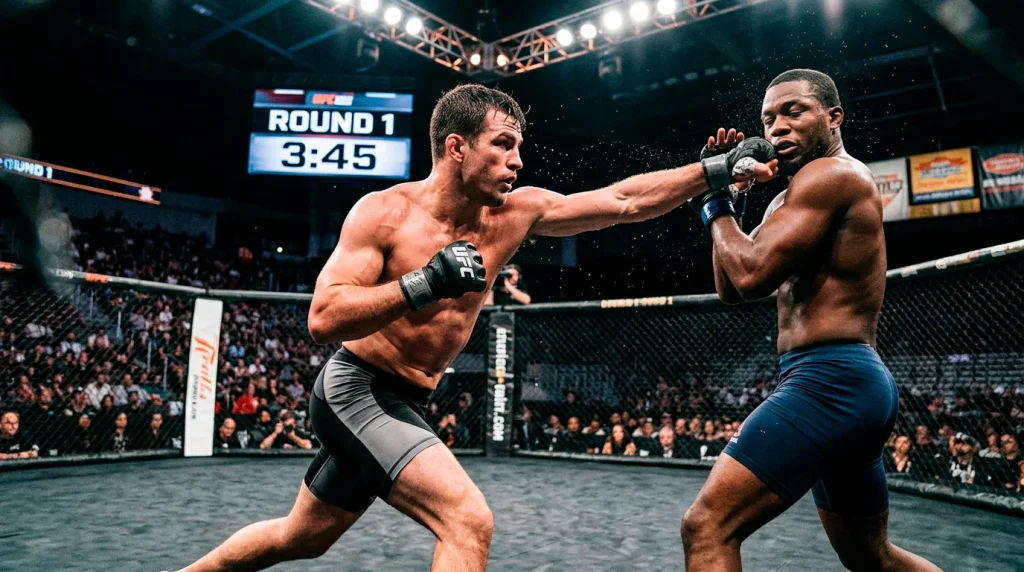
High-Impact Fight Stats That Shift UFC Betting Odds
Early in my UFC betting career, I made a spreadsheet with every available statistic for every fighter on a card. Significant strikes per minute, takedown accuracy, submission attempts per fifteen minutes, reach differential, age, time since last fight. I ran correlations, built scoring models, tested backtests. The result? My fancy model performed roughly 2% better than simply picking the favourite in every fight. Two years of work for a margin that would take five hundred bets to even measure with confidence.
The lesson was not that stats are useless — they are essential. The lesson was that most stats are noise, and the few that carry predictive power only matter in the right context. A fighter’s significant strikes per minute tells you very little without knowing who they accumulated those strikes against. A takedown accuracy of 75% means something different against an Olympic wrestler than against a pure boxer. The stats that predict outcomes are not the ones with the biggest numbers — they are the ones adjusted for opponent quality and fight context.
Striking Statistics: Output, Accuracy, and Defence
I track three striking numbers for every fighter I analyse: significant strikes landed per minute, significant striking accuracy, and significant strikes absorbed per minute. The first two measure offensive capability. The third measures vulnerability. Together, they create a picture of whether a fighter is generating damage faster than they are receiving it — the fundamental dynamic of a striking-based fight.
Output alone is misleading. A fighter who throws 7.0 significant strikes per minute but lands at 38% accuracy is throwing leather without precision — volume that creates activity but not necessarily damage. A fighter who throws 4.5 per minute at 55% accuracy is landing cleaner, more damaging shots at a sustainable rate. For betting purposes, accuracy-weighted output — strikes landed per minute, not thrown — is the more predictive metric because landed strikes drive knockdowns and TKO stoppages, which drive fight outcomes.
Striking defence, measured as the percentage of incoming significant strikes absorbed versus attempted, is the single most underrated stat in UFC betting. A fighter with 65% striking defence gets hit by roughly one in three strikes aimed at them. A fighter with 45% defence absorbs more than half. In a three-round fight against an opponent throwing five strikes per minute, the low-defence fighter eats roughly sixty significant strikes while the high-defence fighter absorbs about thirty-five. That cumulative difference frequently determines whether a fight goes the distance or ends in a stoppage, and KO/TKO finishes account for 33.3% of all UFC outcomes.
Grappling Statistics: Takedowns, Control Time, and Submission Attempts
Grappling stats are where I find the widest gap between what the data says and what the bookmaker prices. Most casual bettors evaluate grappling by watching highlight reels of slams and submissions. The numbers that actually predict grappling-based outcomes are less dramatic but far more useful.
Takedown accuracy tells you how often a fighter completes a takedown when they attempt one. Takedown defence tells you how often their opponent fails to take them down. The interaction between these two numbers — one fighter’s offence against the other’s defence — is the best predictor of whether a fight will play out on the feet or on the ground. When a high-accuracy takedown artist (70%+) meets a low-defence striker (55% or below), the fight will almost certainly involve extended ground control, pushing the outcome towards decision or submission and away from a standing knockout.
Control time — the minutes and seconds a fighter spends in dominant position on the ground — is the grappling equivalent of significant strikes landed. It measures effective activity, not just attempts. A wrestler who takes opponents down but cannot maintain position generates takedown statistics without generating fight-winning grappling. Control time distinguishes the wrestlers who win rounds from the ones who simply disrupt the fight without capitalising.
Submission attempts per fifteen minutes is a niche stat but a powerful one for specific prop markets. A fighter averaging 2.0 submission attempts per fight is actively hunting finishes on the ground, not just holding position. Against an opponent with poor submission defence — measured by the frequency with which they have been submitted historically — the submission prop market can carry significant value. Submissions account for 19.7% of all UFC outcomes, and fighters with high attempt rates drive a disproportionate share of that percentage.
Contextual Factors: Opponent Quality, Fight Recency, and Camp Changes
Numbers without context are decoration. A fighter’s 4-0 record over the past two years looks impressive until you discover those four wins came against opponents with a combined record of 8-20 in the UFC. Opponent quality adjustment is the most important filter to apply to any statistical profile, and it is the one most frequently ignored by both punters and automated models.
I use a simple approach: for each of a fighter’s last five bouts, I note the opponent’s UFC record at the time of the fight and their current ranking. Statistics accumulated against top-fifteen opponents carry full weight. Statistics against unranked opponents carry half weight. Statistics against fighters who are no longer in the UFC carry even less — those fighters were often cut for a reason, and beating them does not indicate elite-level capability.
Fight recency matters because combat sports are physically degrading. A fighter who last competed eighteen months ago may have improved in the gym or may have ring rust that training cannot simulate. The global number of MMA events has grown from roughly 100-110 in 2020 to over 180 projected for 2025, with UFC running a consistent 42-43 events per year. That expansion means more fighters are competing more frequently, reducing the average layoff between bouts — but when a layoff does occur, it stands out as a deviation from the norm that the market sometimes underweights.
Camp changes are the most difficult contextual variable to quantify but potentially the most impactful. A fighter switching from a striking-focused gym to a wrestling-heavy camp may show dramatically different tendencies in their next fight than their career statistics suggest. I track camp changes by following MMA media during fight week — embedded series, social media posts, and training footage often reveal new training partners and adjusted tactical approaches. These signals are too soft for a statistical model but too important to ignore in a manual analysis. The strategy framework integrates contextual factors into a structured five-step evaluation process.
Data-Driven UFC Betting Articles UK
Global Handle & UFC Betting Market Growth
Key Drivers Behind the UFC Betting Market Expansion When I started tracking UFC odds seriously in 2017, MMA was a sideshow on most sportsbooks — buried under three navigation layers,…
Division Finish Data & UFC Round Betting Strategy
Utilizing Division Data for UFC Round Betting The first round bet I…
Structuring High-Value UFC Parlay Bets in the UK
Managing Correlation Risk in UFC Accumulator Bets I keep a spreadsheet of…
Remote Gaming Duty & UFC Betting Tax Changes UK
The Impact of General Betting Duty on UFC Odds On 1 April…
Published by the OctaEdge team.
