
Recency Bias & Common UFC Betting Mistakes
 Available in US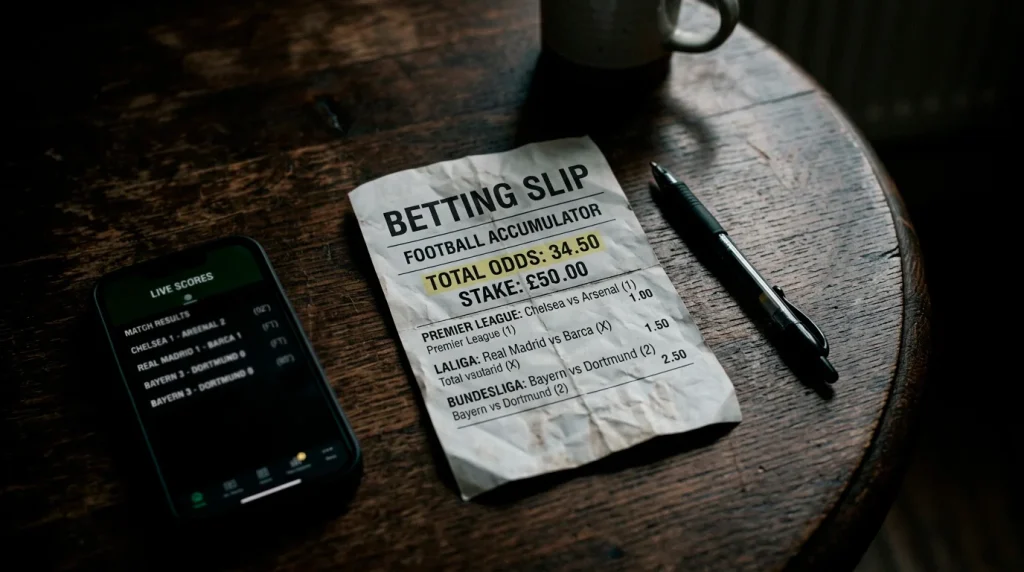
Avoiding Costly Errors in UFC Style Matchup Evaluation
Three years into my UFC betting career, I hit a losing stretch that felt random — upsets, bad calls, unlucky finishes. So I pulled every bet I had placed over six months and categorised the losses. The result was embarrassing. Eighty percent of my losses fell into five recurring patterns. The fighters I lost on were not random — I was making the same analytical and structural errors on repeat, just with different names and different cards. Fixing those patterns improved my ROI more than any new analytical technique I have tried since.
Favourites win roughly 72% of UFC fights, which means 28% of the time the expected outcome does not happen. That is not a flaw in your process — it is the base rate of the sport. What separates profitable bettors from losing ones is not their hit rate on individual fights but their ability to avoid the systematic errors that turn a manageable 28% loss rate into a bankroll-destroying 45% loss rate. The mistakes I describe here are the ones I see most often in my own records and in conversations with other UFC bettors.
Analytical Mistakes: Recency Bias, Name Value, and Ignoring Styles
Recency bias is the single most expensive analytical error in UFC betting. A fighter who just knocked someone out in spectacular fashion gets backed by the public as if that performance defines their capability, regardless of the opponent’s quality or the stylistic dynamics of the next fight. I fell for this repeatedly in my early days — backing fighters coming off highlight-reel finishes without asking whether their next opponent presented the same vulnerabilities. The answer was usually no.
The data supports this. In men’s flyweight since 2020, favourites have posted a 30-8-1 record — a 77% win rate. But the fighters who became favourites purely on the back of a single impressive win, rather than sustained dominance, showed a materially lower success rate than those with consistent form across multiple opponents. Recency bias inflates the odds of the fighter who “looked good last time” and deflates the odds of their opponent, creating value on the side the public is ignoring.
Name value operates on the same principle at a longer timescale. Established fighters with mainstream recognition — former champions, UFC veterans, fighters with large social media followings — attract public money even when their physical skills have declined. The market treats them as if their reputation equals their current capability. It does not. A thirty-seven-year-old former champion returning from a two-year layoff is not the same fighter who won the title at thirty-two, but their name still draws betting volume that pushes their odds shorter than their actual winning probability justifies.
Ignoring stylistic matchups is the analytical error that should be easiest to fix yet persists among experienced bettors. Underdogs priced at +200 or higher won 39% of UFC fights in 2024 — far above the historical average — and many of those upsets were stylistically predictable. A striker with fast hands and good footwork facing a wrestler with slow transitions and limited striking creates a dynamic where the stylistic underdog (on paper) is actually favoured in the specific context of the matchup. Odds reflect reputation and recent results. They do not always reflect the specific collision of skills that determines the outcome.
Structural Mistakes: Over-Parlaying, Chasing, and No Record-Keeping
Over-parlaying is the structural mistake I see most often and the one I am most vocal about. Parlays are entertainment products — the bookmaker’s margin compounds with each leg, turning a 4% edge per fight into a 12% edge on a three-leg accumulator. The 72% favourite win rate that feels reassuring on a single bet drops to 37% on a three-leg parlay of 72% favourites. A punter who builds four-leg and five-leg parlays every week is not betting — they are donating to the operator’s revenue line.
Chasing losses is the structural mistake that kills bankrolls fastest. You lose your first three bets on a card, and now the co-main event is starting and you know — you know — that the favourite is going to win. So you double your stake to recover the evening’s losses in a single bet. The favourite loses, because 28% of the time they do, and now you are down five units instead of three. Chasing is not an analytical failure. It is an emotional one, driven by the need to end the session even rather than the need to make good decisions.
No record-keeping is the structural mistake that enables all the others. If you do not track your bets — selection, odds, stake, result, profit or loss — you cannot identify your patterns. You cannot calculate your yield, your ROI, your hit rate by market type, or your performance by division. You are flying blind, and every successful pilot will tell you what happens when you fly blind. I started keeping detailed records in year three, and it was the single most transformative change I made. The bankroll management guide covers the mechanics of tracking and why it matters for staking discipline.
Emotional Mistakes: Fandom, Revenge Bets, and Tilt
I am a fan of MMA. I have fighters I admire, fighters I dislike, and fighters whose success I am emotionally invested in. That emotional investment is toxic for objective betting. The fighter I want to win is not the fighter the data says will win, and when those diverge, the data has to take priority. I lost more money in my first two years backing fighters I was personally rooting for than on any other category of mistake — because fandom replaces analysis with wishful thinking.
Revenge bets — staking on a fighter who beat someone you lost money on, as if punishing the fighter through the market — are irrational but surprisingly common. They follow a logic that is emotional rather than analytical: “Fighter A cost me money last time, so I am betting against them this time.” The revenge bet ignores the fact that Fighter A may be in a completely different matchup, at different odds, against a different stylistic profile. It is a decision driven by past anger rather than present analysis.
Tilt — borrowed from poker terminology — describes a state where emotional frustration degrades decision quality. UFC fight nights are long, running from 1am to 5am UK time, and the accumulation of wins and losses across a card creates emotional momentum that influences later bets. I have placed my worst bets at 4am after a string of losses, when fatigue and frustration combined to make me abandon my process. Setting hard stop-loss limits — I am done for the night after losing five units — prevents tilt from destroying what might otherwise have been a manageable losing session. Roughly 2.7% of UK adults show gambling behaviour associated with problem gambling, and emotional wagering is one of the pathways that leads there. Recognising tilt in yourself is not weakness — it is risk management.
Data-Driven UFC Betting Articles UK
Global Handle & UFC Betting Market Growth
Key Drivers Behind the UFC Betting Market Expansion When I started tracking UFC odds seriously in 2017, MMA was a sideshow on most sportsbooks — buried under three navigation layers,…
15% Revenue Share & UFC Fighter Pay Betting Impact
Structural Betting Risks from UFC Fighter Pay Discrepancies I was sitting in…
Track Record Verification & UFC Betting Tipsters
Evaluating Yield versus Win Rate in UFC Tipsters I followed a UFC…
UK Bookmaker & Exchange UFC Betting Odds Comparison
Maximizing ROI Through UFC Betting Odds Comparison During UFC 300, I placed…
Written by the editors at OctaEdge.
