
Historical Data & UFC Underdog Win Rate Analytics
 Available in US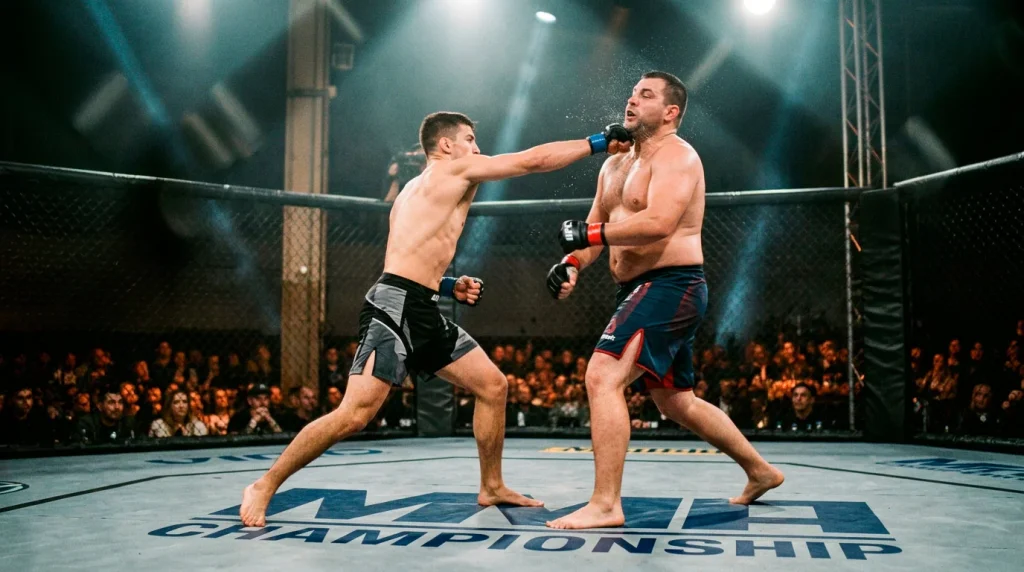
High-Odds Upset Trends in UFC Underdog Betting
I remember checking the numbers twice because they did not make sense. Fighters priced at +200 or longer — the ones the market gave less than a one-in-three chance — won 39% of their UFC bouts in 2024. The historical average for that tier sits around 28%. A ten-percentage-point jump in a single year is not noise. It is a signal, and it rewrote the value map for anyone paying attention.
What does a 39% win rate at +200 odds actually mean in practical terms? At +200 (3/1 fractional, 3.00 decimal), the implied probability built into the odds is 33%. If underdogs in that range win 39% of the time, you are getting paid as if they win a third of the time when they actually win closer to two in five. That gap between implied probability and actual probability is the definition of positive expected value. Over a hundred bets at those odds and that hit rate, you earn roughly eighteen units of pure profit — a result most professional bettors would consider exceptional.
The obvious question: was 2024 an anomaly, or is the UFC underdog landscape shifting structurally? The honest answer is both. Talent depth across UFC rosters has increased, particularly in divisions like lightweight and welterweight where the skill gap between ranked and unranked fighters has narrowed. At the same time, public money tends to pile onto favourites in MMA more heavily than in team sports, creating pricing inefficiencies that sharper bettors can exploit.
Historical Underdog Win Rates Across UFC Divisions
Division-level data tells a more nuanced story than the aggregate. In men’s flyweight since 2020, favourites have compiled a record of 30-8-1, winning 77% of the time — the highest favourite win rate of any division. If you are hunting for underdog value, flyweight is the hardest place to find it. The weight class is small, the talent pool is relatively shallow, and the top fighters have historically dominated in predictable fashion.
Contrast that with heavyweight. The combination of one-punch knockout power and relatively lower cardio capacity makes heavyweights the most volatile division for betting purposes. A fighter who looks physically outmatched can land one clean right hand and end the fight in seconds. The favourite win rate in heavyweight fluctuates more year to year than any other weight class, making it the division where underdog upsets feel almost structural rather than anomalous.
The middleweight and welterweight divisions sit in an interesting middle ground. These weight classes have enough roster depth that matchmakers frequently create competitive pairings where the underdog designation is driven more by name recognition and recent momentum than by genuine skill differential. A fighter coming off a loss might be priced as a +150 underdog despite being stylistically favoured against their opponent — a dynamic I have exploited profitably more than a dozen times over the past two years.
Favourites winning 72% of all UFC fights means underdogs take roughly 28% overall. But that 28% is not evenly distributed. In closely matched fights where the favourite sits between -110 and -200 (roughly 2/5 to 4/6 fractional), the underdog win rate climbs to the mid-30s. In massive mismatches where the favourite is -400 or shorter, the underdog win rate drops below 15%. The actionable insight is that moderate underdogs — the ones the market considers unlikely but not impossible — win meaningfully more often than their odds suggest.
Champion Underdogs: The 63% Title Retention Anomaly
Here is a stat that should reshape how you think about title fights: out of nineteen UFC champions who defended their belt as betting underdogs, twelve retained their title. That is a 63% win rate for fighters the market said would lose. In no other context would you find a 63% winner priced as an underdog, and yet it happens repeatedly in championship bouts.
Why? Championship experience is an intangible that oddsmakers struggle to price. A champion who has fought five-round main events, handled the pressure of media obligations, managed weight cuts at the highest level, and dealt with the psychological weight of the belt brings advantages that do not show up in striking statistics or grappling numbers. Challengers, by contrast, are often riding momentum from a streak of dominant performances against lesser opponents — performances that inflate their perceived level relative to the champion.
I use this insight selectively, not blindly. Not every champion-underdog is a bet. If the champion is returning from a long layoff, has shown physical decline in recent fights, or is facing a challenger whose style specifically counters their strengths, the historical base rate becomes less relevant. But when a champion is priced at +120 to +180 purely because the challenger is on a flashy win streak, the 63% retention rate provides a strong foundation for a contrarian moneyline bet.
The broader lesson extends beyond title fights. The market overreacts to recency. A fighter who just knocked someone out gets backed heavily by the public regardless of the stylistic matchup in their next fight. A fighter coming off a decision loss gets undervalued regardless of how competitive that loss was. These recency-driven pricing errors are where underdog value concentrates.
Applying Underdog Data to Your UFC Betting Approach
Knowing that underdogs win more often than their odds suggest is not the same as knowing which underdogs to back. The data provides a base rate — a starting point from which you adjust based on fight-specific factors. Thomas Gable, director at Borgata Race and Sportsbook, noted that recreational bettors have been pulling back from UFC wagering following integrity concerns, while regular and sharp bettors remain active. That shift in the betting population changes the market dynamic — less recreational money means odds may be sharper now than they were two years ago, narrowing the easy underdog edges.
My process for identifying underdog bets starts with the division base rate. If I am looking at a lightweight bout, I know the favourite wins about 70% of the time in that division. If the underdog is priced at +180 (implied probability ~36%) but my analysis puts their actual winning probability at 40-45%, the bet carries positive expected value. If my analysis agrees with the market’s 36% assessment, I pass.
The analysis itself leans on three factors: stylistic matchup advantage, recent trajectory, and circumstantial variables. Does the underdog’s style specifically counter the favourite’s approach? Has the underdog been improving while the favourite has been stagnating? Are there circumstantial factors — short notice, travel, weight cut issues — that the odds have not fully absorbed? Two out of three is usually enough to trigger a bet. One out of three is a pass. For a full framework on structuring this analysis, the strategy guide walks through each step with worked examples.
Size your underdog bets differently from your favourite bets. Because underdogs lose more often than they win — even the undervalued ones — your staking needs to account for the higher loss frequency. I typically stake underdogs at 0.5 to 1 unit compared to 1 to 2 units on favourites, knowing that the higher payout per win compensates for the lower hit rate over time. The goal is not to win every underdog bet. The goal is to win enough of them at high enough odds that the cumulative return exceeds what you would earn by only backing chalk.
Data-Driven UFC Betting Articles UK
Recency Bias & Common UFC Betting Mistakes
Avoiding Costly Errors in UFC Style Matchup Evaluation Three years into my UFC betting career, I hit a losing stretch that felt random — upsets, bad calls, unlucky finishes. So…
Staking Rules for UFC Betting Bankroll Management
Optimal Unit Sizing for the Annual UFC Fight Calendar In my second…
Polymarket Crowd Odds vs Traditional UFC Bookmakers
Analyzing Public Sentiment in UFC Prediction Markets The first time I saw…
15% Revenue Share & UFC Fighter Pay Betting Impact
Structural Betting Risks from UFC Fighter Pay Discrepancies I was sitting in…
Prepared by the OctaEdge editorial staff.
