
Weigh-In Data Impact on UFC Weight Cut Betting
 Available in US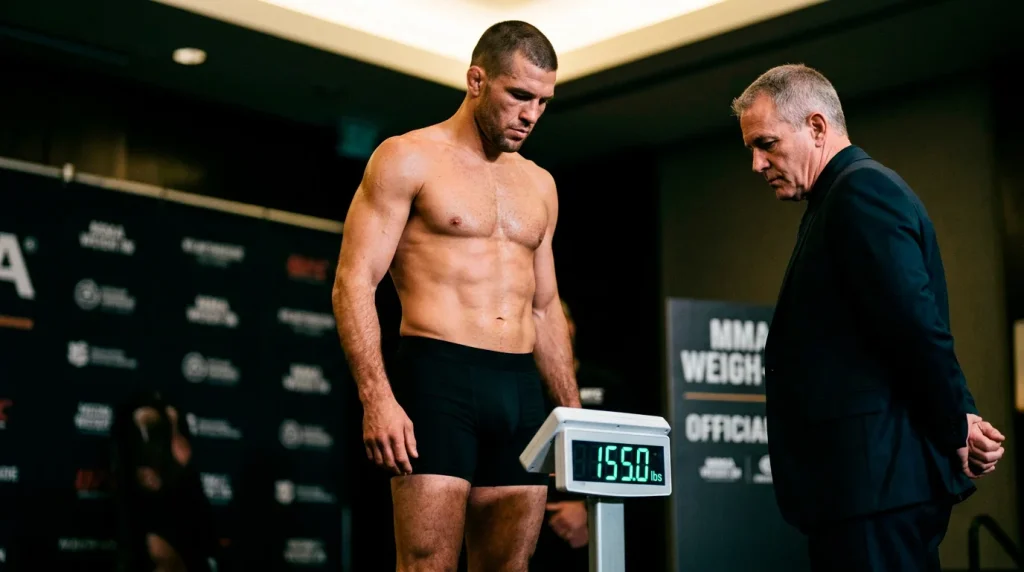
Analyzing Rehydration Patterns for UFC Betting Advantage
I was watching a weigh-in stream two years ago when a fighter stepped on the scale looking like a skeleton wearing skin. Sunken eyes, visible ribcage, moving slowly to the mark. He made weight by half a pound. The next night, he got knocked out in the first round by a fighter who had weighed in comfortably and looked hydrated and alert at the ceremonial face-offs. I had already placed my bet before the weigh-in — on the skeleton. Lesson learned: weigh-in data is not supplementary. It is decision-critical.
Weight cutting — the practice of dehydrating to meet a lower weight class limit before rehydrating for the fight — is the most physically punishing aspect of UFC preparation that never happens inside the octagon. A fighter who cuts 15-20 pounds of water weight in the final week before weigh-ins enters a fragile state: depleted glycogen stores, reduced cognitive function, compromised cardiovascular capacity. The question for bettors is not whether weight cuts affect performance. They do. The question is whether the market prices that effect correctly. In my experience, it frequently does not.
How Weight Cuts Work and Why They Affect Performance
Most UFC fighters walk around at a weight significantly above their division limit. A welterweight fighting at 170 pounds might walk around at 190-195. The cut happens in stages: a gradual diet-based reduction over camp, followed by aggressive water manipulation in the final 48-72 hours. Fighters use saunas, hot baths, towel-wrapped treadmill sessions, and restricted fluid intake to drop the last 10-15 pounds through dehydration.
After weighing in, fighters have roughly 24 hours to rehydrate and refuel before the fight. The fighters who manage this process well — through professional nutritionists, IV rehydration where permitted, and gradual carbohydrate loading — can recover most of their strength and endurance. The ones who botch the cut or push too aggressively arrive at the cage with diminished chin durability, slower reactions, and cardio that fades earlier than their statistics predict.
KO/TKO finishes account for 33.3% of all UFC outcomes, and a significant proportion of those stoppages involve fighters whose ability to absorb damage has been compromised by an aggressive weight cut. The connection is physiological: dehydration reduces cerebrospinal fluid volume, which provides less cushioning for the brain during impact. A fighter who typically survives to a decision but cut particularly hard for this fight may be more susceptible to a knockout — a dynamic that shifts the method of victory probabilities without the bookmaker necessarily adjusting the odds.
Missed Weight History: What Happens When Fighters Come In Heavy
A missed weight is the most visible sign that a fighter’s cut went wrong, but it is not the only sign — it is just the one that makes the news. When a fighter misses weight, they typically face a financial penalty (a percentage of their purse forfeit to the opponent) and the fight proceeds at a catchweight. The betting market reacts immediately: odds shift, sometimes dramatically, and some operators briefly suspend markets while they reprice.
What the data shows is counterintuitive. Fighters who miss weight actually win more often than expected. The logic is straightforward: they are competing at a weight closer to their natural size, while their opponent — who made weight — went through the full dehydration process. The fighter who missed weight has a size and hydration advantage that partially compensates for whatever physical distress caused the miss. For bettors, a missed weight announcement should trigger a reassessment of the fight dynamics, not an automatic assumption that the fighter who missed is compromised.
I track every missed weight across the UFC calendar and note the result. The sample is small — missed weights happen on roughly 5-8% of cards — but the pattern is consistent enough to be actionable. When a fighter misses weight and the market overreacts by dramatically shortening the opponent’s odds, there can be value on the fighter who missed. Not always, but often enough to warrant analysis rather than reflexive backing of the opponent.
Reading Weigh-In Signals for Betting Purposes
Weigh-ins broadcast two types of information: the number on the scale and the visual condition of the fighter. The number is objective — you either make weight or you do not. The visual information is subjective but informative if you know what to look for.
Fighters who struggle with the cut show physical signs: pronounced cheekbones, dry cracked lips, slow deliberate movements, and a general look of depletion that experienced observers recognise immediately. Compare their weigh-in appearance to their previous weigh-in photos. If a fighter who normally looks comfortable on the scale appears significantly more drawn than usual, their cut was harder this time — which means their recovery is less certain and their fight-night performance carries more downside risk.
The ceremonial weigh-ins, which happen after the official weigh-ins and allow fighters to face off at a rehydrated weight, provide additional signals. A fighter who has rehydrated well will look fuller, more alert, and more physically imposing than they did on the scale. A fighter who has not recovered well may still appear drawn at the ceremonials — a red flag for anyone who has bet on their performance. I check both weigh-in streams whenever possible and have adjusted bets twice this year based on what I saw at the ceremonial face-offs.
The timing of your bet matters relative to the weigh-in. If you place your bet on Monday and the weigh-in is on Friday, you are betting blind on the weight cut variable. Some punters prefer early placement to capture the best odds before fight-week line movement. Others wait until after weigh-ins to incorporate the weight cut information. My approach splits the difference: I place 60-70% of my stake early in the week on fights where the weight cut history is clean and predictable, and reserve 30-40% for post-weigh-in placement on fights where the cut is uncertain. That way I capture some early value while maintaining flexibility to react to weigh-in information. The fight stats analysis covers how to weight contextual factors like weight cuts alongside striking and grappling data.
Data-Driven UFC Betting Articles UK
Track Record Verification & UFC Betting Tipsters
Evaluating Yield versus Win Rate in UFC Tipsters I followed a UFC tipster on social media for three months before I noticed something odd. His claimed win rate was 74%,…
Market Depth & UFC vs Bellator Betting Differences
Rule Variations Influencing UFC and Bellator Betting Odds A friend of mine…
Title Markets & UFC Futures Betting in the UK
Securing Early Value in UFC Title Fight Futures Most of my UFC…
Division-Level Data & UFC Betting Statistics 2026
Analyzing Favourite Win Rates in UFC Betting Statistics Nine years of analysing…
Written by the editors at OctaEdge.
