
Machine Learning Models for UFC Betting AI Predictions
 Available in US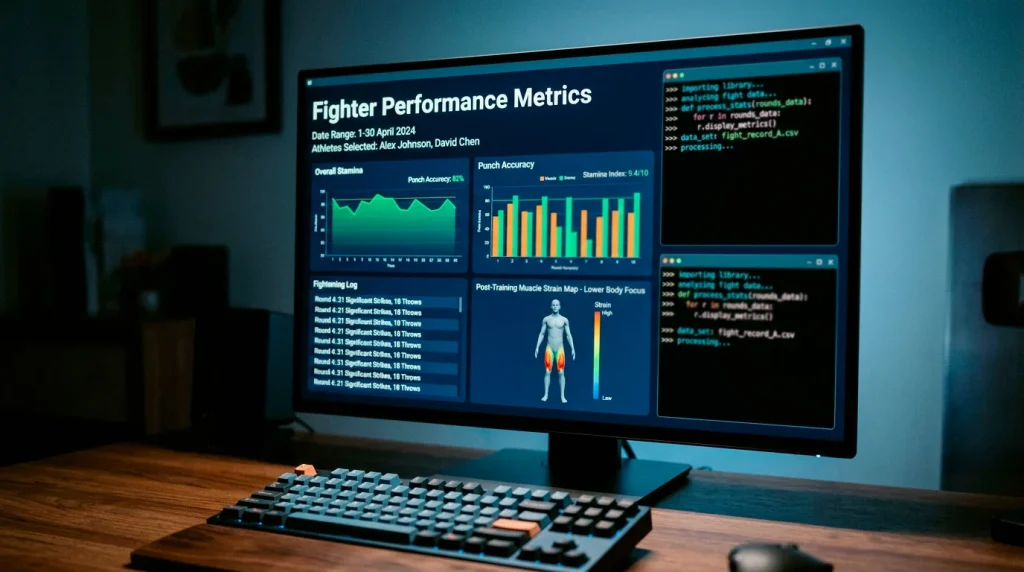
Data Inputs Used in UFC AI Betting Prediction Models
I built my first UFC prediction model in 2019 using a random forest algorithm fed with fighter statistics from the previous three years. It predicted 61% of moneyline outcomes correctly on test data — impressive until I compared it to the bookmaker’s implied favourite, which was right 72% of the time. My sophisticated model was 11 percentage points worse than simply looking at who the bookmaker thought would win. That humbling experience taught me what AI can and cannot do in combat sports prediction.
Machine learning models for UFC have proliferated in the last five years. Academic papers, commercial prediction services, and hobbyist GitHub repositories all claim various accuracy rates against historical data. UFC’s gross gaming revenue has grown at above 18% annually, attracting data scientists to MMA betting the way gold rushes attract prospectors. Some of these models genuinely add value. Many do not. Understanding the difference requires knowing how they work and where they break down.
How Machine Learning Models Analyse UFC Fight Data
Most UFC prediction models follow a common architecture. They ingest fighter statistics — significant strikes per minute, takedown accuracy, submission attempts, striking defence, opponent quality metrics — and train a classification algorithm to predict whether Fighter A or Fighter B wins. The algorithms vary: logistic regression, random forests, gradient boosted trees, and neural networks are all represented in published research. The training data is typically every UFC fight from a defined period, with some holdout for testing.
The better models go beyond raw statistics. They incorporate engineered features: striking differential (output minus absorption), recent trajectory (trend in performance metrics over last three to five fights), stylistic matchup indicators (striker-versus-grappler flags), and contextual variables like fight location, altitude, and whether either fighter is coming off a long layoff. Some incorporate Elo-style rating systems that adjust for opponent quality automatically — a feature that addresses the single biggest weakness in raw UFC statistics.
The output is usually a predicted probability for each fighter, which can then be compared to the bookmaker’s implied probability to identify potential value bets. A model that predicts Fighter A at 58% probability when the bookmaker implies 50% has identified a potential edge — assuming the model is well-calibrated and not overfitting to historical patterns that no longer hold.
Calibration is the critical word. A model that predicts fighters at 60% probability should see those fighters win approximately 60% of the time in practice. If fighters predicted at 60% actually win 55% of the time, the model is overconfident. If they win 65% of the time, it is underconfident. Most hobby-built UFC models are not well-calibrated because the sample sizes involved — a few hundred fights per division — are too small for the algorithms to learn stable patterns. The model I built in 2019 was miscalibrated by about 4 percentage points on average, which meant every “value bet” it identified was actually fairly priced or slightly overvalued.
Where AI Fails: Style Changes, Motivation, and Small Sample Sizes
The fundamental limitation of AI in UFC prediction is that fights are contested between humans, not data points. A fighter’s statistical profile describes their past. It does not guarantee their future. Fighters change camps, adjust strategies, age out of their physical prime, suffer motivational declines after personal crises, or suddenly improve after working with a new coach. None of these transitions appear in the data until several fights after they occur — by which point the model is learning from a lagging indicator.
Small sample sizes compound the problem. Most active UFC fighters compete two to three times per year. Over a three-year window, that is six to nine data points per fighter. Training a machine learning model on six observations is statistically meaningless for individual prediction — the model can identify population-level patterns (taller fighters with reach advantages win slightly more often) but cannot reliably distinguish between two specific fighters with overlapping statistical profiles.
Underdogs priced at +200 or higher won 39% of their fights in 2024, compared to a historical average of 28%. No model trained on historical data would have predicted that spike, because it was driven by year-specific factors — deeper talent pools, changing matchmaking patterns, and possibly a shift in how fighters prepare for opponents at the highest level — that are not captured in the input variables. Models that assume stationarity (past patterns continuing unchanged) are inherently unable to capture regime changes in sport dynamics.
Motivation is the variable that makes AI predictions in UFC fundamentally different from, say, chess or Go. A fighter who has just signed a new contract and feels financially secure may fight differently than one who needs a win to avoid being released from the roster. A fighter going through a divorce, dealing with a training camp injury they have not disclosed publicly, or simply losing the competitive drive that brought them to the UFC — these factors determine outcomes but exist nowhere in any dataset a machine learning model can access.
Using AI Predictions Alongside Your Own Analysis
So should you ignore AI predictions entirely? No. The value is not in replacing your analysis but in supplementing it. A well-built model provides a probability anchor — a starting point that reflects the statistical base rate for a given matchup. Your job as a human analyst is to adjust that anchor based on the contextual information the model cannot see.
Mark Shapiro of TKO Group Holdings described Polymarket’s utility as an information and fan engagement tool — a way to visualise what fans believe will happen in real time. The same framing applies to AI models. They are information tools, not oracles. They tell you what the data says. You decide whether the data is telling the full story.
My current workflow uses a simple logistic regression model as a first pass on every fight card. The model generates a predicted probability for each bout based on the statistical inputs I described earlier. I then compare the model’s output to the bookmaker’s implied probability and my own subjective assessment. When all three sources disagree — the model says 55%, the bookmaker says 62%, and my gut says 48% — that is a fight I either skip or research more deeply. When two out of three align, I follow the majority signal. The model is not the decision-maker. It is one voice in a three-way conversation.
Free AI-based prediction tools exist online, but treat them with caution. Most do not publish their methodology, training data, or calibration metrics. A prediction service that claims 75% accuracy without showing its work is a marketing exercise, not a scientific tool. If you want to use AI predictions seriously, build your own model — the data is freely available from UFCStats and Tapology — or at minimum, back-test any commercial model’s historical predictions against actual results before following its picks with real money. The stats analysis guide covers which variables carry the most predictive power and how to weight them in your own assessment.
Data-Driven UFC Betting Articles UK
Polymarket Crowd Odds vs Traditional UFC Bookmakers
Analyzing Public Sentiment in UFC Prediction Markets The first time I saw a UFC fight priced on a prediction market, my immediate reaction was scepticism. A crowd of anonymous internet…
Global Handle & UFC Betting Market Growth
Key Drivers Behind the UFC Betting Market Expansion When I started tracking…
UK Sportsbook Promotions & UFC Free Bets
Wagering Requirements for UK UFC Free Bets The first free bet I…
Outright Winner Odds & UFC Moneyline Betting
Identifying Value in UFC Moneyline Betting Markets Every punter I have ever…
Published by the OctaEdge team.
